



Professor Seema Jayachandran finds a school-based intervention in India shifts adolescents’ attitudes about gender
September 2, 2021
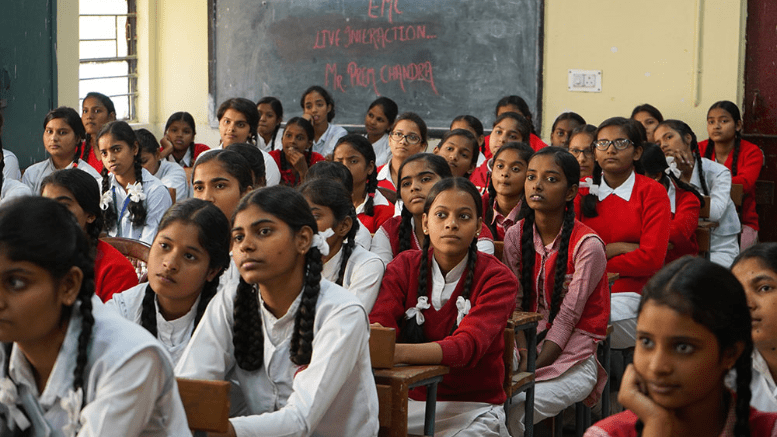
India is currently home to more than 1.3 billion people, but a cultural preference for sons has meant the population has disproportionately more men than women. As a result, India lags behind many countries around issues of gender equality, and Economics Professor Seema Jayachandran is working to combat these gaps through a school-based program that has proven to shift students’ attitudes about gender.
Jayachandran, a team of researchers, the nonprofit Breakthrough, which specializes in changing gender norms, and the Haryana state government implemented an educational intervention in a randomized control trial across 314 government schools. Breakthrough facilitators taught one 45-minute session during the school day every three weeks between April 2014 and October 2016 in the hopes of changing student’s attitudes about gender. The sessions encouraged discussions using a combination of human rights and pragmatic reasons to value women.
They found that the program made both boys and girls more supportive of gender equality, and about 16% of students who originally endorsed inequality began to change their minds.
“What’s especially striking is that the effects we saw a few months after the program ended were still as strong two years later,” Jayachandran said. “The greater belief in gender equality instilled by the program stuck with the boys and girls.”

For boys, going through the program resulted in more gender-equitable behaviors, such as helping more with household chores. Jayachandran said these results highlight the need to include boys and men in interventions to address gender inequality.
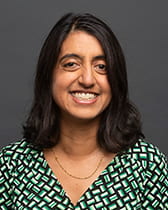
Professor Seema Jayachandran
“One plausible explanation is that boys have more personal freedom to act on what they believe in, without fear of reprisal or pushback from their family or community,” she said. “The very fact that boys and men have more power in society means that they might be better positioned to change practices.”
Because of the success of the program, the state of Punjab, which has a population of 30 million people, will implement it in government schools later this year, reaching 600,000 students per year.
Read more about this study here at Northwestern’s Institute for Policy Research.
Faculty

Joel Mokyr wins Nobel Prize in Economic Sciences
October 13, 2025
Nobel recognizes Mokyr’s theory on sustained economic growth Joel Mokyr, the Robert H. Strotz Professor of Arts and Sciences and professor of economics and history in the Weinberg College of Arts and Sciences at Northwestern University, today (Oct….

Northwestern accelerates quantum research with NVIDIA technology
September 19, 2025
NVIDIA code could help researchers tackle computationally demanding tasks hindering quantum research Northwestern University physicists are using NVIDIA technology to tackle the computationally demanding tasks hindering quantum research. Northwestern theoretical physicist Jens Koch and his research group…

Weinberg College welcomes new faculty members for 2025-2026 academic year
September 18, 2025
Shreeya Behera Assistant Professor of Instruction PhD institution: The Ohio State University Previous title and institution: Data Scientist at Pandora Bio, Inc. Home department: Statistics and Data Science Shreeya Behera is a mathematician and data…

Weinberg College faculty and graduate students recognized for excellence in teaching
July 2, 2025
Each year, the Weinberg College of Arts and Sciences and the Office of the Provost recognizes members of the College’s tenure-line and teaching-track faculty for excellence in teaching. Weinberg College in addition recognizes the contributions…